info@izharmonnoo.com
 0800-11463
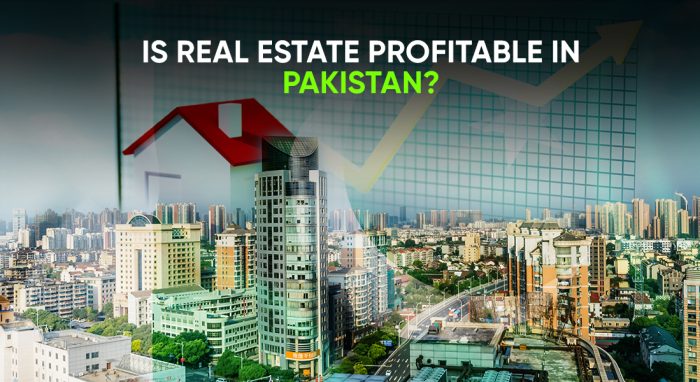
The Pakistani real estate sector contributes around 60-70% to the country’s total wealth. Both residential and commercial sectors continue to draw considerable attention from investors nationwide and even abroad. The real estate market delivers significant profit, especially in the large cities. The exact return on investment can fluctuate based on the country’s economy, location of your investment, or governmental policies but the compound annual growth rate indicates that the wave will remain positive at least in the next five years.
Why Do Pakistanis Prefer Real Estate Investment?
In 2024, the real estate market size reached approximately PKR 2662 billion. Real estate investments outperformed alternative options like fixed deposits and mutual funds. The sector has grown over the past decade, with a special increase in demand for smaller properties.
People consider the real estate market a profitable investment due to the continuous depreciation of the PKR against the American USD. Across Pakistan’s cities, real estate shines with striking diversity – Karachi small properties exploded with 187% returns over eight years, while Gujranwala and Multan dominated medium and large segments with 196% and 163% gains, respectively. Economic pressures have pushed middle-class buyers toward smaller properties, creating a vibrant market where investors find opportunities in every city and segment.
The real estate developers represent the sector as a tangible asset that passes wealth to future generations, unlike other volatile investments.
Which Pakistani Cities Offer the Best Real Estate Returns?
Each major city presents distinct investment opportunities with varying profit margins. The residential sector in particular is anticipated to experience a compound annual growth rate of 4.01%, with the market volume reaching US$1.56tn by 2029.
This makes the residential real estate market particularly profitable. Noticeable projects like Dream Gardens Lahore and Dream Gardens Multan by Izhar Monnoo Developers makes investing in the sector particularly easy and budget friendly.
Karachi remains the commercial hub with premium returns in developing societies like Bahria Town and DHA City. Waterfront properties in schemes along the coastal belt have shown good appreciation rates during stable market periods.
Lahore offers consistent growth in established housing societies like DHA Lahore, Dream Gardens Lahore, Bahria Orchard and Dream Avenue Lahore delivering sound ROI.
Islamabad provides stable appreciation with lower volatility. The Capital Development Authority’s regulated approach maintains market discipline. Premium housing schemes like Gulberg Greens and Blue Area commercial properties generate steady returns with lower risk profiles.
Gwadar represents speculative investment with massive long-term potential tied to CPEC developments. Land prices have multiplied several times over the past decade, though with significant fluctuations based on development progress and political stability.
Commercial and construction real estate markets across all major cities are equally competitive. The GDP Contribution of the construction department of real estate increased from 2.9 to 3.6% within four years.
How Much Capital Do You Need For Real Estate Investment?
The beauty of Pakistan’s real estate market lies in its accessibility across various investment budgets:
For entry-level investors, PKR 5-10 million can secure residential plots in developing societies on the outskirts of major cities. These often require longer holding periods but offer substantial appreciation potential.
Mid-range investments of PKR 15-25 million open opportunities for commercial properties in tier-2 locations or residential units in established areas. These typically generate rental yields of 5-7% annually.
Premium investments exceeding PKR 50 million target prime commercial properties in central business districts or luxury housing in exclusive neighborhoods. These command premium rental returns while maintaining strong capital appreciation.
Does Location Impact Profitability in Real Estate?
Location remains the fundamental driver of real estate returns. Properties near educational institutions command premium rental yields, attracting student and faculty tenants with reliable payment histories.
Proximity to transportation hubs increases both rental demand and appreciation rates. Areas connected to metro stations in Lahore and Islamabad show higher values than comparable properties without such connectivity.
Established commercial corridors provide consistent rental returns with lower vacancy risks, while emerging commercial zones offer higher appreciation potential with correspondingly higher risk.
How Can You Maximize Your Real Estate Profit Returns?
Strategic approaches can significantly enhance your investment performance:
Buy-hold-sell strategies work effectively in developing societies where infrastructure improvements trigger value jumps. Buying at the launch phase and selling after development completion often generates returns exceeding standard market appreciation.
Rental optimization through proper property management and tenant selection improves cash flow while reducing maintenance expenses. Professional property management services, though reducing gross yields by 5-10%, often deliver better net returns through improved occupancy rates and reduced maintenance costs.
Value addition through strategic renovations or repurposing can multiply returns, particularly in aging properties within prime locations. Commercial conversion of residential properties in transitioning neighborhoods frequently delivers exceptional returns despite requiring additional permits.
What Are the Current Real Estate Market Trends?
Several trends currently shape Pakistan’s real estate landscape:
Vertical development has gained momentum, particularly in Karachi and Lahore, where land scarcity drives construction upward. High-rise residential and mixed-use projects now dominate new developments, offering attractive rental yields and management convenience.
Overseas investment continues to flow despite economic challenges. The Pakistani diaspora views domestic real estate as a secure investment channel, with remittances for property purchase exceeding $2 billion annually.
Technology integration transforms the market through online property portals, virtual tours, and digital payment systems. This increased transparency benefits investors by providing better market information and reducing transaction friction.
Conclusion
The Pakistani real estate market is a profitable investment but it faces a few challenges as well. Economic stabilization efforts and potential IMF program extensions may restore investor confidence. The government’s construction package incentives continue supporting development activity despite their scaled-back scope compared to initial announcements.
Infrastructure developments linked to CPEC continue creating new investment hotspots, particularly along major highway corridors connecting economic zones.
The real estate sector in Pakistan continues to offer attractive returns despite economic headwinds. Increase in urban population (approx 38.6%) and less land availability has shifted the demand towards high rise apartments in Pakistan.
For investors with appropriate capital, time horizons, and risk tolerance, property remains a viable wealth-building vehicle. However, success requires thorough research, location selectivity, and strategic timing rather than speculative purchasing.